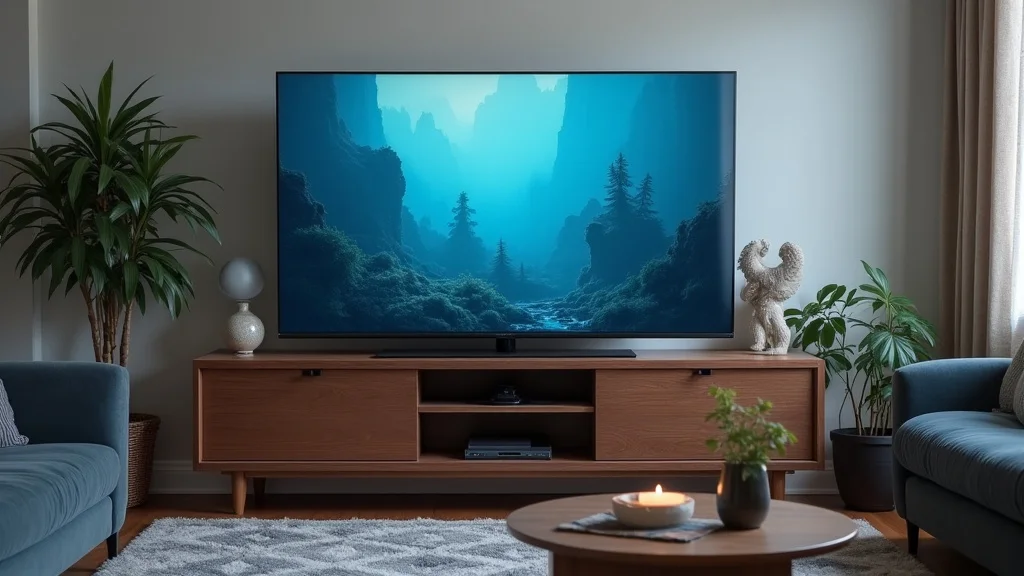

Remember the last time you went to buy a TV? You probably looked at the size, right? But how do you measure televisions to know you are getting the right one? It’s not always as simple as the screen size. There are all sorts of features and specifications to consider. This post will help you become a savvy TV shopper or simply know more about the tech in your living room. You’ll learn the key factors that go into evaluating a television and how to compare different models. You’ll be better prepared to make a smart purchase or improve your current setup, increasing your Time on Page and reducing your Bounce Rate.
Screen Size and Physical Dimensions
The first thing people notice is the screen size. This is usually the easiest specification to find, but it’s important to know how it’s determined. Measuring a TV accurately helps you make sure it fits where you intend to put it and gives you a good sense of its viewing experience. Let’s explore the process behind these key measurements.
Measuring Screen Size
Screen size is the diagonal measurement of the visible display area. To find this, you use a tape measure to get the length from one corner of the screen to the opposite corner. This measurement is always in inches. For instance, a television advertised as a “55-inch TV” has a diagonal screen measurement of 55 inches. The bezel (the frame around the screen) isn’t included in this measurement. Make sure the screen is off so you don’t damage it or affect the accuracy of the measurement.
- Tools Required: All you need is a tape measure and, optionally, a helper. This ensures you can measure safely and accurately, particularly with larger TVs.
- Accuracy Matters: Even a slight measurement error can impact how the TV fits in your space. Make sure you are precise, and measure to the nearest 1/4 inch.
- Avoid the Bezel: Bezel sizes vary, but the diagonal screen size refers only to the viewable area. Don’t include the bezel in your measurement.
- Units: Screen size is always expressed in inches in the United States and many other countries. Be careful if you are using other measurement systems.
- Consider the Space: Before you measure, think about where the TV will go. Will it fit in your cabinet or on the wall? This helps with your final choice.
Physical Dimensions and Considerations
While screen size provides a general idea, physical dimensions – the height, width, and depth of the TV – are vital for placement. These dimensions incorporate the bezel, stand (if applicable), and any external components. You will need to consider the depth of the TV, especially if it’s wall-mounted, to avoid creating a clumsy display. Also, the stand adds to the dimensions, so measure the space where the TV will sit to ensure a perfect fit.
- Measure Everything: Use your tape measure to find the height, width, and depth. This includes the stand.
- Include the Stand: If you plan to use the stand, measure its height and the space it needs to sit on.
- Wall Mount Preparation: If mounting, consider the distance from the wall and accessibility to ports. This will ensure your installation goes smoothly.
- Bezel Variations: Thinner bezels make a bigger screen possible in a smaller overall space. Consider this during your measurements.
- Check the Specs: Manufacturers usually provide detailed physical dimensions. Check these measurements against your space.
Screen Resolution and Picture Quality
After you know about the size, you need to understand resolution and picture quality. These features directly impact how sharp and detailed the image will be. Knowing how resolution affects image quality and considering factors like color accuracy and contrast ratio are keys to evaluating a great viewing experience. Let’s review the main aspects of picture quality.
Understanding Resolution
Resolution refers to the number of pixels (picture elements) on the screen. The more pixels, the sharper the picture. The standard resolutions are: HD (1280×720 pixels), Full HD (1920×1080 pixels), and Ultra HD or 4K (3840×2160 pixels). 4K displays offer four times the detail of Full HD, allowing images to appear crisper and cleaner. If you want the best viewing experience, consider resolution as a key factor.
- Pixel Count: Higher pixel counts mean sharper, more detailed images. 4K has 8 million pixels compared to Full HD’s 2 million.
- HD vs. 4K: 4K provides more detail and is great for large screens and close viewing distances.
- Content Availability: Make sure there’s content available in the resolution of the TV. For 4K, this includes streaming services and 4K Blu-ray discs.
- Upscaling: Many TVs can upscale lower-resolution content to match their native resolution, improving picture clarity.
- Aspect Ratio: The ratio of width to height (e.g., 16:9) matters. Most modern content is 16:9, matching most TV screens.
Picture Quality Metrics
Beyond resolution, picture quality includes other elements. These are the aspects that impact how the images will look on your TV. Color accuracy, contrast ratio, and brightness are all essential aspects of the overall visual experience. Understanding these metrics helps you assess a television’s performance and determine how well it will show off the content you love.
- Contrast Ratio: The difference between the brightest and darkest areas of the screen. A higher ratio means more detail in dark scenes.
- Color Accuracy: How true the colors are to real life. Look for TVs with good color accuracy to get more realistic and beautiful visuals.
- Brightness: Measured in nits (candelas per square meter). High brightness is key, especially in bright rooms.
- Panel Technology: LCD, LED, OLED, and QLED have different performance levels. Explore these options to find what works best for your needs.
- Viewing Angles: Consider how image quality changes when you watch from the side. Wide viewing angles are best for a group of viewers.
Display Technologies: LED, OLED, and QLED
The type of panel technology used in a television is one of the most important factors that go into evaluating how good it will look. LED, OLED, and QLED technologies vary significantly in how they produce images, each with its own advantages and disadvantages. This section delves into the differences and helps you select the right technology for your home setup.
LED TV Technology
LED (Light Emitting Diode) TVs use LED backlights to illuminate the LCD (Liquid Crystal Display) panel. The LEDs are positioned behind the panel, and they shine through to create the picture. LED TVs are generally brighter than OLED TVs and often more affordable. However, the quality of the backlight and the LCD panel can vary greatly, impacting contrast and black levels.
- Backlight Types: LED TVs can use edge-lit or full-array backlights. Full-array backlights usually provide better contrast because of the ability to control local dimming.
- Brightness and Price: LED TVs are known for their brightness. This makes them well-suited for bright rooms. Their affordability can also make them a great entry point.
- Contrast Limitations: LED TVs can struggle with true blacks. Backlight bleed can sometimes appear.
- Viewing Angles: LED viewing angles can vary. The picture can wash out as you move off-axis.
- Popular Choice: They’re a common choice due to their versatility and wide range of prices and sizes.
OLED TV Technology
OLED (Organic Light-Emitting Diode) TVs don’t use a backlight. Each pixel emits its own light, which allows for perfect blacks and infinite contrast. OLED TVs offer stunning picture quality, with vivid colors and wide viewing angles. They are usually more expensive than LED TVs, but they represent the pinnacle of picture performance.
- Self-Emitting Pixels: Each pixel can turn on or off individually, providing perfect blacks. This significantly enhances contrast.
- Perfect Blacks: The ability to fully turn off pixels results in blacks that are truly black, boosting image depth and realism.
- Viewing Angles: OLED TVs generally have excellent viewing angles. You can watch from the side without any picture quality loss.
- Burn-In Risk: OLEDs can be susceptible to burn-in if static elements are on-screen for a long time.
- Price Point: OLED TVs are generally more expensive than their LED counterparts.
QLED TV Technology
QLED (Quantum Dot LED) TVs are LED TVs that use quantum dots to enhance color. Quantum dots are tiny nanoparticles that emit specific colors of light when struck by a light source. QLED TVs usually have higher color volume and brightness levels. QLEDs compete closely with OLEDs in terms of picture quality. However, they can still struggle with the perfect blacks OLED TVs provide.
- Quantum Dot Layer: This layer enhances the color and brightness of the image.
- Color Volume: QLED TVs offer high color volume, which provides more vibrant and realistic colors.
- Brightness Performance: QLEDs can get very bright, making them suitable for bright rooms.
- Contrast Challenges: QLED TVs usually don’t have the same level of contrast as OLED, especially when it comes to true blacks.
- Price and Performance: They offer a balance of price and picture quality, often positioning them as a premium option.
Refresh Rate, Response Time, and Motion Handling
These elements impact how well the TV shows fast-moving action, such as in sports and video games. A great refresh rate, combined with quick response times, provides a clear and smooth image, reducing motion blur. When assessing a television’s performance, it is helpful to explore these technical specifications.
Refresh Rate Explained
The refresh rate, measured in Hertz (Hz), indicates how many times the screen refreshes the image per second. A higher refresh rate, like 120Hz, means the image updates more often. This results in smoother motion, reducing blur in fast-moving scenes. Standard refresh rates include 60Hz and 120Hz. A higher refresh rate is especially beneficial for fast-paced video games and sports.
- Hz Significance: A higher refresh rate (120Hz) results in clearer motion, especially in action-packed scenes.
- 60Hz vs. 120Hz: 120Hz is preferred for action, while 60Hz is good for general viewing.
- Motion Blur: A lower refresh rate can cause motion blur. This is when objects appear blurry during movement.
- Source Matching: The TV needs content that matches its refresh rate. (e.g., 120Hz TV will perform best with 120fps video games or content).
- Improves Gaming: Gamers will prefer higher refresh rates as they offer the best gaming experience.
Response Time Importance
Response time is the time it takes for a pixel to change from one color to another, usually measured in milliseconds (ms). A fast response time reduces ghosting and motion blur, making the image sharper. This is especially important for gaming, where fast-moving graphics are standard. Low response times ensure smooth visuals, which improves the overall viewing experience.
- Minimizing Ghosting: Quick response times make sure that fast-moving objects don’t appear blurred.
- Gaming Performance: Low response times are key for a responsive gaming experience.
- Color Transitions: A fast response time means smoother and more accurate color transitions.
- Panel Technology Impact: OLED TVs often have very fast response times due to their self-emitting pixels.
- Visual Clarity: The faster the response time, the clearer and sharper the image.
Motion Handling Techniques
Modern TVs use motion-handling techniques to improve the smoothness of fast-moving images. This is often achieved through technologies like motion interpolation, which creates additional frames to reduce blur. Understanding these techniques helps you evaluate how a TV handles fast-moving action, like in action films or sports broadcasts. Motion handling also makes the picture easier to watch.
- Motion Interpolation: This feature adds frames to smooth out the image, reducing motion blur.
- Black Frame Insertion: This adds black frames between the existing frames, which reduces motion blur.
- Customization: These settings are often adjustable. Find the settings you enjoy.
- Soap Opera Effect: Some users don’t like motion interpolation. This can make movies look like soap operas.
- Best for Fast Content: Sports and action movies benefit greatly from good motion handling.
Connectivity and Smart Features
Beyond picture quality, connectivity and smart features significantly impact the overall viewing experience. Modern televisions are not just displays; they are integrated entertainment hubs that provide access to streaming services, external devices, and other functionalities. Exploring these aspects will ensure the television meets your needs and preferences. Let’s explore these features.
HDMI Ports and Connections
HDMI (High-Definition Multimedia Interface) ports are key for connecting devices, such as gaming consoles, Blu-ray players, and soundbars. The number of HDMI ports on a television determines how many devices you can connect simultaneously. More advanced HDMI versions (like 2.1) support high frame rates, resolution, and features like eARC (enhanced Audio Return Channel) for better audio performance. Make sure to consider future connectivity.
- Number of Ports: Consider how many devices you have and plan to connect.
- HDMI 2.1: Supports 4K at 120Hz, perfect for gaming and high-quality video.
- eARC: Improves audio quality and supports high-bitrate audio formats.
- Device Compatibility: Ensure your devices support the same HDMI version as the TV.
- Placement and Accessibility: Consider where the ports are located on the TV. This ensures easy access.
Smart TV Features and Operating Systems
Smart TVs have built-in internet connectivity and access to streaming services like Netflix, Hulu, and Amazon Prime Video. The operating system of a smart TV (e.g., Android TV, webOS, Tizen) greatly impacts its usability. Evaluate the interface, app selection, and ease of use. A user-friendly OS is essential for a great viewing experience. Consider how easy it is to use the TV.
- Operating System: Look for a fast and user-friendly operating system.
- App Selection: Check for the apps you use most often.
- User Interface: The user interface should be easy to navigate.
- Voice Control: Many TVs support voice control.
- Updates and Support: Ensure the TV manufacturer provides regular software updates.
Other Connectivity Options
Besides HDMI, other connectivity options increase a television’s versatility. USB ports allow you to play media from external storage devices. Bluetooth enables you to connect wireless headphones or speakers. Ethernet ports provide a stable wired internet connection. Understanding these options helps you ensure the television meets all of your connection needs. This improves your overall experience.
- USB Ports: Use USB ports to connect external hard drives and play media files.
- Bluetooth: Connect wireless devices like headphones and sound systems.
- Ethernet: Get a more reliable internet connection.
- Optical Audio Out: Connect to soundbars and receivers.
- Compatibility Check: Make sure the ports meet your device requirements.
Frequently Asked Questions
Question: How do I measure my TV’s screen size accurately?
Answer: Use a tape measure to measure the diagonal distance from one corner of the screen to the opposite corner. This is in inches and does not include the bezel (the frame around the screen). Ensure the TV is off during measurement.
Question: What is the difference between 4K and 1080p resolution?
Answer: 4K (3840×2160 pixels) offers four times the resolution of 1080p (1920×1080 pixels). This means 4K has more pixels, resulting in a sharper and more detailed image, particularly on larger screens.
Question: What is the difference between LED, OLED, and QLED technologies?
Answer: LED TVs use LED backlights, OLED TVs use self-emitting pixels (no backlight for perfect blacks), and QLED TVs are LED TVs that use quantum dots to enhance color. OLED offers the best picture quality, but QLED and LED provide great performance with different advantages in brightness and price.
Question: Why is refresh rate important?
Answer: The refresh rate indicates how many times the screen refreshes the image per second (measured in Hertz, Hz). Higher refresh rates (like 120Hz) result in smoother motion, reducing motion blur in fast-moving scenes, such as sports and video games. A faster refresh rate offers the best gaming experience.
Question: What is HDMI 2.1, and why is it important?
Answer: HDMI 2.1 is the latest HDMI standard that supports 4K resolution at 120Hz refresh rates, along with features such as eARC for enhanced audio. It’s important because it enables high-quality video and audio performance, especially for gaming and modern home entertainment.
Final Thoughts
How do you measure televisions? Well, it’s more than just a quick measurement of the screen. Accurately assessing a television involves considering multiple factors, from physical dimensions and resolution to picture quality, panel technology, refresh rate, and connectivity. Understanding how to measure screen sizes and taking into account the viewing environment is also essential. The choice of LED, OLED, or QLED technology has a huge impact on your visual experience. The connections and smart features also need to match your needs. By exploring the key aspects of a television’s features, you can make an informed choice. Take time to research and explore the options before making a purchase. Remember to measure carefully and consider your viewing preferences. This gives you the tools to find the perfect television for your space and entertainment needs. Happy viewing!
