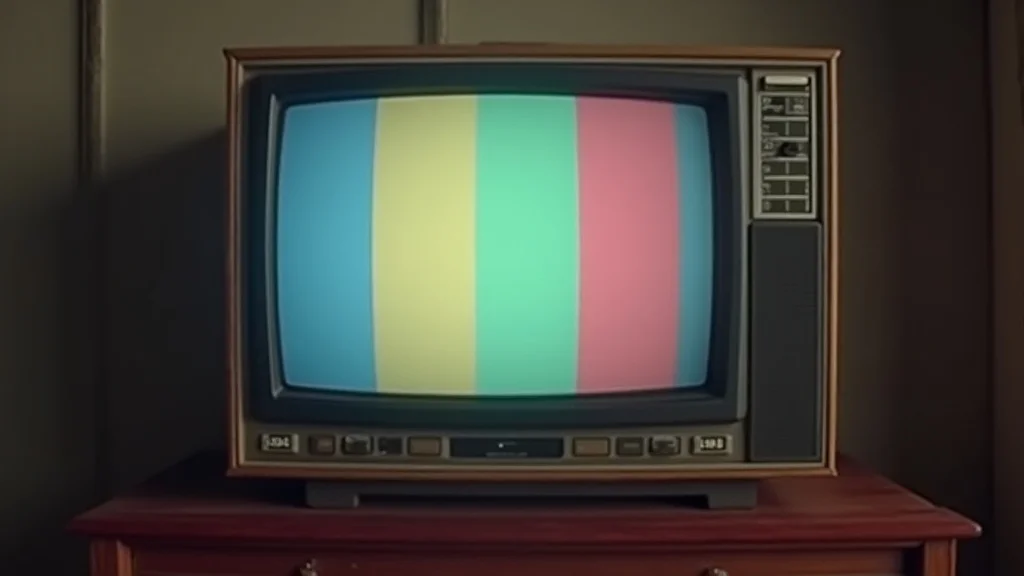

Remember those old black-and-white shows? Imagine watching them in vibrant color! Think about your favorite modern TV shows and how much better they are with color. Today, we’re going to explore a bit of history and learn about color television. Many people wonder what year did color television come out? We’ll rewind the clock and explore the innovation that transformed how we watch TV. By the end, you’ll know the answer and gain insights into the technology’s influence. This post will improve your knowledge of television and the evolution of technology in our lives.
The Dawn of Color Television Broadcasting
The transition from black and white to color television was a significant event. It changed how people experienced entertainment and how the broadcasting industry functioned. Many developments contributed to its eventual launch. The development process involved years of research and testing to ensure that color television was compatible with the existing infrastructure. Many companies competed to create the best system, and technological standards had to be established. Understanding the key milestones is essential for appreciating the impact of color television and its journey to become a standard household item.
Early Experiments and Prototypes
Before the widespread adoption of color television, many experimental systems were created. Inventors and engineers experimented with different methods of transmitting and displaying color. Early attempts used mechanical scanning techniques, which were complex and not very practical. These systems often involved spinning wheels with color filters or complex electrical circuits. These early forerunners laid the groundwork for the more successful electronic systems that came later. While they weren’t commercially viable, they demonstrated the potential and sparked the imagination of many.
- Early color TV systems used mechanical scanning, but they weren’t successful due to mechanical difficulties.
- Inventors tried different methods to send color information, like using separate channels for each color.
- Prototypes had low picture quality and often faced issues with color accuracy and stability.
The Technological Hurdles
Several significant technical challenges stood in the way. One main issue was compatibility. The color system had to work with existing black-and-white televisions. This meant that viewers with older TVs could still watch broadcasts, even if they couldn’t see the color. There was also the challenge of creating a color receiver that was affordable and could produce a high-quality picture. The complex technology had to be simplified for mass production. Engineers worked to solve these issues, leading to significant advancements.
- Compatibility with existing black-and-white TV sets was a major concern to reach more people.
- Developing a reliable and cost-effective color receiver was an involved engineering problem.
- Ensuring accurate color reproduction was critical. Engineers had to overcome interference and other issues.
The Development of the Color Standard
The establishment of a standard for color broadcasting was a pivotal step. In the United States, the National Television System Committee (NTSC) played a vital role. The NTSC developed a system that became the basis for color television broadcasting in North America. This involved selecting the way color information would be encoded and transmitted. It also included setting technical standards for picture quality and other factors. This standardization ensured that all color TVs and broadcasts would be compatible, paving the way for the adoption of color technology across the country.
- The NTSC standard in the US was a key development for unifying broadcast signals.
- Standards were necessary for the creation of compatible color TVs and broadcasts.
- These standards were a complex process that needed industry-wide agreement to ensure compatibility.
The Breakthrough: What Year Did Color Television Come Out?
After many years of research and development, the moment finally arrived. The introduction marked a turning point in television history. The industry and consumers eagerly awaited the arrival of this new technology. With the establishment of the technical standards and production improvements, color TV was ready for the wider audience. The public could finally watch their favorite shows in vibrant color.
The Announcement and Initial Broadcasts
The official announcement created excitement throughout the country. The announcement led to the very first broadcasts of color shows. Initial broadcasts had limited color programming, as the transition was gradual. However, these first broadcasts were significant in showing off the technology. Many viewers were able to watch special events and shows in their homes.
- The initial color broadcasts were a major media event, creating hype for the new tech.
- Early broadcasts often featured special events and shows to highlight the technology’s capabilities.
- There was a slow transition, with color programming increasing gradually as the technology improved.
The Year of Color Television’s Official Launch
So, what year did color television come out? In the United States, regular color television broadcasts began in the early 1950s. The exact year is often cited as 1953, but the rollout was gradual. It took several years for color TVs to become commonplace. This year marks a significant date in television history, when the industry embraced this new technology.
The Impact of the New Tech on the Industry
The introduction of color fundamentally changed the television industry. Programmers started to make shows in color. The color broadcasts increased the appeal of television. New methods of production were needed to create vibrant programming. This created new jobs and innovations. This technological development spurred the growth of the industry.
- Television shows began to be produced in color, changing the industry’s direction.
- The demand for color programming led to innovations in production techniques.
- The availability of color TVs increased consumer demand and boosted advertising revenues.
The Technology Behind Color TV
Color television technology used various advancements to bring color to the screen. The picture tubes, encoding, and decoding systems worked together to create the color images. Here’s a brief look at some of the key components and methods used.
The Picture Tube
The picture tube was the heart of the color TV. Instead of a single electron gun used in black-and-white sets, the color tube had three electron guns. Each gun aimed at a different color—red, green, and blue (RGB). The inside of the screen was covered with tiny dots or stripes of phosphor. These phosphors glowed when struck by electrons. By controlling the intensity of each electron gun, the TV could display any color. This was a complex but effective system.
- Three electron guns controlled red, green, and blue pixels.
- Phosphor dots on the screen created colors when struck by electrons.
- The interplay of the three primary colors created a wide range of hues.
Color Encoding and Decoding
Color signals had to be encoded for broadcasting and then decoded by the TV. The color signal was added to the black-and-white signal. The NTSC system used a clever method. It transmitted color information in a way that wouldn’t interfere with the black-and-white picture. The color signal included information about hue and saturation, the two key aspects of color. The TV’s decoder separated these signals to display the color picture. This system ensured compatibility with older TVs.
- The color information had to be encoded without disrupting existing broadcasts.
- Color signals contained hue and saturation information.
- TVs had decoders that separated the color signal to create a complete picture.
The Evolution of Color Display
The picture tube wasn’t the only technology used for color display. Other technologies came later, such as LCD (Liquid Crystal Display) and LED (Light Emitting Diode) screens. These screens use different methods to create colors, but the principles of color mixing remain the same. These advancements have improved picture quality, energy efficiency, and screen size. The journey from the picture tube to today’s modern displays is a testament to technological progress.
- LCD and LED screens replaced older CRT technology.
- Modern TVs use RGB color mixing to create different colors.
- These advancements enhanced picture quality and energy efficiency.
The Impact and Influence of Color Television
Color television’s arrival profoundly affected society. The way we consume media was changed, and new avenues for creativity and culture were created. It also influenced other areas, such as advertising and entertainment. This section will explore the broader effects of this technology.
Changes in Programming
The arrival of color television spurred creativity and influenced how shows were made. Producers could now use a wider palette of visual effects. Color was essential for many genres, like dramas, comedies, and game shows. The availability of color made television more entertaining and a more appealing medium. Shows began to be designed to take advantage of color.
- Color changed how TV shows looked and were designed.
- Visuals, costumes, and sets became more important.
- The shift to color opened up new opportunities for creativity.
The Effect on Advertising
Color had a massive effect on advertising. Color advertisements were much more visually striking. They made products more appealing. Advertisers quickly adapted to the new technology to increase their profits. TV became a very effective medium for marketing. Television advertising revenue grew significantly.
- Color advertising became more appealing and effective.
- Advertising revenue soared due to increased viewer engagement.
- Businesses recognized the power of color to influence consumer choices.
Cultural and Social Impacts
Color television had a strong influence on culture. It shaped how people perceived the world and consumed media. Color shows were new and exciting for many. Television became a bigger part of people’s lives. It helped create a shared cultural experience for people across the country. Color had a lasting effect on media consumption.
- Color brought shared cultural experiences.
- TV became a central part of people’s leisure time.
- Television’s influence created a sense of shared experience.
Future of Television Technology
Television technology has advanced in amazing ways since color first appeared. Technologies like high-definition, 4K, and 8K provide even better picture quality. Smart TVs, streaming services, and interactive features are changing how people consume video content. The future holds even more exciting developments.
Recent Advancements
Modern television technologies provide improved visuals. High Dynamic Range (HDR) technology expands the range of colors and brightness. OLED screens offer deeper blacks and vibrant colors. The rise of streaming services has changed the way people watch television. Smart TVs provide access to a wide variety of content through apps. These advancements bring a rich and immersive viewing experience.
- High Dynamic Range (HDR) greatly improves picture quality.
- OLED technology provides better contrast.
- Streaming services and smart features have changed viewing habits.
Emerging Technologies
Future TV technologies could bring new possibilities. Augmented Reality (AR) and Virtual Reality (VR) could become integrated with television. Displays could become even bigger and better, perhaps even becoming transparent. The focus is always on making the viewing experience more engaging. These developments will influence the future.
- AR and VR could be integrated for interactive viewing.
- Displays could evolve into new shapes.
- The future focuses on enhancing immersion.
The Ongoing Evolution
Television technology continues to transform rapidly. The goal is to provide more immersive and interactive experiences. As technology develops, we can expect improvements in picture quality. New technologies will improve the way we watch our favorite shows. The future will bring innovations that change how we experience entertainment.
Consider these real-life scenarios:
- Imagine watching the first color broadcast of the Macy’s Thanksgiving Day Parade. The vibrant balloons and floats would have been a spectacular viewing experience compared to a black-and-white image.
- Picture a family gathering around their new color TV to watch a sports game. The excitement would have increased thanks to the realistic colors of the players’ uniforms and the field.
Here’s a table comparing some older TV display technologies with modern options:
| Technology | Characteristics |
|---|---|
| Cathode Ray Tube (CRT) | Bulky, heavy, lower resolution, good contrast |
| Plasma | Thinner than CRT, good contrast, but not as bright |
| LCD (Liquid Crystal Display) | Thin, lightweight, energy-efficient, often relies on backlighting |
| LED (Light Emitting Diode) | Improved brightness and contrast compared to LCD, often using LED backlights |
| OLED (Organic Light Emitting Diode) | Excellent contrast, perfect blacks, thin and flexible, more expensive |
Frequently Asked Questions
Question: What specific year did the first color television broadcast take place?
Answer: While the exact year is often cited as 1953, the launch was a gradual process. Some broadcasts occurred before, but 1953 is the best answer.
Question: Did color TVs use the same antennas as black and white TVs?
Answer: Yes, the color signals were designed to be compatible with existing antenna systems. They didn’t require a different antenna setup.
Question: What were the main differences between color and black and white TV sets?
Answer: Color TVs had picture tubes with three electron guns to produce red, green, and blue. Black-and-white TVs had one electron gun.
Question: Why did color TV become so popular?
Answer: Color made programming more engaging and visually appealing, enhancing the viewing experience and creating greater demand.
Question: Are the original color TVs still working today?
Answer: Some well-maintained color TVs from that period still operate. These sets are highly collectible.
Final Thoughts
The transition to color television marked a pivotal moment. The technology, which emerged during the 1950s, revolutionized the entertainment industry. The development of compatible standards, picture tubes, and encoding systems created the first color broadcasts. This change had a huge effect, from the way TV shows were made and advertised to people’s overall culture. Technology continues to evolve, bringing better image quality, immersive experiences, and new ways to enjoy video content. This journey from black-and-white to today’s high-definition displays is an amazing story of innovation. Explore the evolution of this technology and appreciate the developments that have shaped how we see our world. Embrace the history of innovation!
