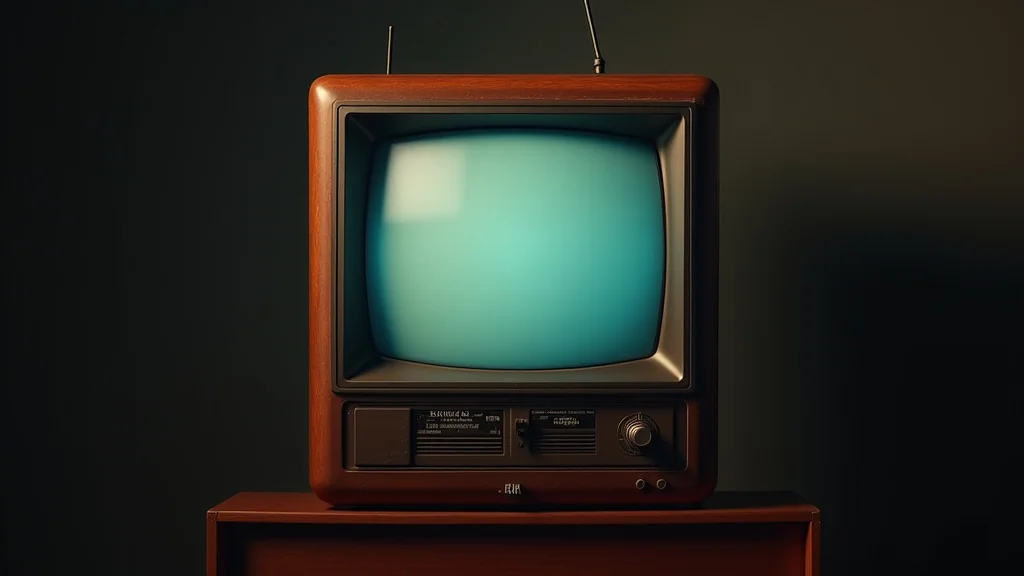

Imagine settling down with your favorite snacks, ready to watch the latest episode of a show, only to realize the screen is blank. Frustrating, right? Before this magic box filled our living rooms, the concept of television was just a dream. It took brilliant minds and many years to transform that dream into reality. In this post, we’ll explore the fascinating story of who and when was the television invented. You’ll gain a solid grasp of its evolution, from early concepts to the first broadcasts, improving your knowledge and providing interesting talking points.
The Genesis of a Technological Marvel
The story of the television is not a straightforward one; it’s a tale of innovation, competition, and the gradual merging of ideas. The foundations were laid by numerous inventors and scientists building upon each other’s work. It began with the simple aim of transmitting images over long distances. Several advancements in electrical and mechanical technology were necessary to make this a functional reality. The concepts behind how a TV works, from capturing an image to displaying it, were created over many decades. These achievements were built on a century of scientific discoveries and the relentless dedication of innovators.
Early Concepts of Image Transmission
The quest to transmit images electronically started with the fundamental discovery of how electricity could carry information. Pioneers understood that light could be converted into electrical signals and then reassembled. These early pioneers included a wide range of individuals, from engineers to scientists. The first attempts used mechanical methods to scan images. These methods, while innovative for their time, were slow and prone to breaking down. These early ideas were the building blocks for the future.
- The invention of the selenium photocell was a key step, as it converted light into electrical signals. This was a critical component of the early attempts to transmit images.
- Paul Nipkow’s mechanical scanning disc, introduced in the late 19th century, was a pivotal idea. It broke down images into lines, which could then be transmitted.
- Early inventors like Willoughby Smith and Johann Wilhelm Hittorf discovered the photosensitivity of certain materials, which were critical to early image capture.
- A series of improvements in electrical components and the development of the cathode ray tube (CRT) were essential for the display part of the television.
The Mechanical Scanning Era
The initial attempts to create television relied on mechanical scanning systems. These systems used rotating discs with holes arranged in a spiral pattern. The light passing through the holes would scan an image, converting it into a signal. This signal was then transmitted and reconstructed on a receiving device using a similar disc. While these systems were the first to demonstrate the possibility of TV, they had significant limitations. The images were small, of low quality, and the mechanical parts were prone to wear and tear. They paved the path toward more refined electronic approaches.
A key player in this period was John Logie Baird. He successfully demonstrated the first working television system using mechanical scanning. His system, though primitive by today’s standards, was a landmark achievement. The images he transmitted were basic, but they proved the viability of television. These early demonstrations excited the public and spurred further interest in developing this technology. Baird’s work demonstrated the feasibility of television broadcasting.
The Pioneers and Their Contributions
Several individuals made significant contributions during the early development of the TV. These individuals are often recognized as the key figures. The story of TV is filled with brilliant minds, from electrical engineers to inventors. Their efforts, combined with the continuous improvements in the underlying technology, are responsible for the TVs we use today. These key players brought different skills and expertise to the task, with their individual contributions contributing to a more effective whole.
- John Logie Baird: Often considered the father of television, Baird achieved the first public demonstration of a working television system. His system used mechanical scanning.
- Philo Farnsworth: Farnsworth developed an all-electronic television system using a cathode ray tube for both the camera and the display. His design was a significant advancement.
- Vladimir Zworykin: Zworykin invented the iconoscope and the kinescope, key components of the all-electronic TV system. This significantly improved image quality.
- Charles Jenkins: Jenkins made early advancements in mechanical television and conducted the first radio broadcast of a silhouetted image in 1925.
The Rise of All-Electronic Television
The development of all-electronic television marked a turning point. These systems, using cathode ray tubes for both image capture and display, were a huge advancement over the mechanical systems. The electronic systems provided far better image quality and were more reliable. This move was made possible by rapid improvements in electronics technology. The evolution of electronic television set the stage for the mass adoption of the technology.
The development of the iconoscope camera tube by Vladimir Zworykin and the kinescope picture tube provided essential components for all-electronic TV. Philo Farnsworth, independently, created his own all-electronic system, which led to a legal battle. The victory of electronic systems over mechanical ones resulted in a major increase in image quality and opened the door to widespread adoption. This was an important moment in the history of television.
The Role of the Iconoscope and Kinescope
The iconoscope and the kinescope were the fundamental components that made all-electronic TV possible. The iconoscope served as the camera tube, converting light into an electrical signal. The kinescope was the picture tube, reproducing the image on a screen. These inventions allowed for a better signal processing and greater image quality, leading to a much improved viewing experience. The impact of these components was huge.
- The Iconoscope allowed for electronic image capture. It converted light into an electrical signal by using a mosaic of light-sensitive cells.
- The Kinescope, or picture tube, received the signal from the camera and displayed the image on a screen. It used a beam of electrons to scan the screen.
- These advancements
- The development of the iconoscope and kinescope also enabled higher resolution and more consistent picture quality. This was a critical factor in the success of TV.
Philo Farnsworth’s Breakthrough
Philo Farnsworth is credited with inventing the first fully electronic television system. His system used electronic scanning, making it faster and more efficient than mechanical alternatives. This was a pivotal moment in the development of the TV. His innovations provided the basis for the TV technology we know and use today. His work also involved facing numerous challenges, including competition and legal disputes, ultimately paving the way for the success of television.
Farnsworth’s innovative design was a breakthrough, but he faced many struggles to develop and market his design. He had to battle with other inventors over patents and rights. His contributions, combined with the efforts of other pioneers, eventually resulted in the TVs we are familiar with today. His relentless drive to bring the TV to reality is a major piece of the story of who and when was the television invented.
The First Television Broadcasts and Public Demonstrations
After many years of work and experimentation, the time came for the first public broadcasts. These early broadcasts were more than just the end of experimentation. They were crucial in demonstrating the potential of TV technology to the public and potential investors. These broadcasts were a major step in the journey of TV. The initial broadcasts were essential in solidifying TV’s place in modern culture. They were significant events for both science and society.
The first public demonstrations occurred in the late 1920s and early 1930s. John Logie Baird demonstrated his mechanical TV system, and Vladimir Zworykin and Philo Farnsworth demonstrated their electronic systems. These events attracted significant public interest, sparking excitement about the possibilities of the technology. These early events helped move the concept of the TV from the lab to homes around the world. These early demonstrations showcased the progress that had been made.
Early Television Stations and Programming
Following the public demonstrations, the creation of television stations and programming began. These stations were essential for broadcasting content to the public. These early broadcasters were pioneers. The content broadcast was often experimental, featuring a variety of formats. Programming included news, variety shows, and even early dramas. These early attempts paved the way for the broadcasting methods we use today.
- The first experimental TV broadcasts were conducted by various organizations and inventors. These were used to test and refine the technology.
- Early programming was limited in scope. It often consisted of short programs, news reports, and experiments.
- Stations like the BBC in the United Kingdom and RCA in the United States played key roles in advancing broadcast. They were instrumental in the progress of broadcast TV.
- As technology improved, so did the content and quality of broadcasting. This eventually led to the development of commercial TV.
The Impact of Television on Society
The impact of TV on society has been enormous. It has transformed the way we consume information and entertainment. This is still a major factor today. It has changed social interactions and brought the world closer together. The influence of the TV on entertainment and culture continues to be felt. The development of TV broadcasting has fundamentally transformed how we communicate.
- Entertainment: TV became a primary source of entertainment, with movies, shows, and sporting events reaching a large audience.
- News and Information: TV provided immediate access to news and information, influencing public opinion and social movements.
- Social Impact: TV changed how families spent their time and shaped cultural norms, as well as influencing social interactions.
- Advertising: It became a powerful tool for advertising and marketing, driving economic growth and shaping consumer behavior.
The Evolution of Television Technology Over Time
TV technology has undergone a stunning evolution from the mechanical systems of the early days to the digital and high-definition televisions of today. This transformation has been influenced by continuous advancements and a need to improve the viewing experience. These changes demonstrate the rapid pace of technological development. The shift toward digital technology has dramatically affected image quality and functionality.
The transition from analog to digital broadcasting was an important milestone. This change brought enhanced picture quality, improved sound, and more efficient use of the spectrum. The introduction of technologies such as color TV, high-definition (HD), and 4K have resulted in a better experience for the viewer. These improvements underscore the significant changes that have shaped the development of TV.
From Black and White to Color TV
The development of color TV was a huge advancement, moving TV from the black and white era. This innovation required complex engineering challenges to transmit and display colored images. It made the viewing experience more engaging and realistic. This technological evolution altered how people received information and entertainment. Color broadcasting improved the visual experience.
- Early color TV systems like the RCA system used a mechanical approach with spinning color wheels.
- Later, all-electronic systems emerged, allowing for higher quality and more reliable color pictures.
- Color TV fundamentally altered how people viewed content. Colors added a new level of realism and enjoyment.
- The adoption of color TVs led to changes in broadcast programming, with more color-rich content.
The Digital Revolution
The shift to digital technology has completely changed TV. Digital broadcasting has brought about amazing advancements in picture and sound quality. Digital signals provide less interference and allow for additional features. It has enabled interactive services and a broader range of content. The advent of digital technology has made TV more user-friendly.
| Feature | Analog | Digital |
|---|---|---|
| Picture Quality | Lower resolution, prone to noise | High resolution, clearer picture |
| Sound Quality | Mono or stereo, vulnerable to interference | Surround sound, better audio |
| Channel Capacity | Limited, one channel per frequency | Higher, allows multiple channels |
| Additional Features | Few, limited interactive options | More, including on-demand services |
Frequently Asked Questions
Question: Who invented the television?
Answer: The TV was not invented by a single person. Key figures include John Logie Baird, who demonstrated a working mechanical TV system, and Philo Farnsworth and Vladimir Zworykin, who developed all-electronic systems.
Question: When was the first television broadcast?
Answer: The initial experimental broadcasts took place in the late 1920s and early 1930s. These were not the start of regular broadcasting, but they did demonstrate the viability of TV.
Question: What was the first type of television system?
Answer: The first systems were mechanical. They used rotating discs to scan and display images.
Question: What are the main parts of an electronic TV?
Answer: Key components include a cathode ray tube (CRT) for displaying the image, and a system to process and display the electronic signals.
Question: How has TV changed over time?
Answer: It has moved from mechanical to electronic systems, from black and white to color, and from analog to digital broadcasting, also improving resolution.
Final Thoughts
The story of who and when was the television invented showcases an amazing series of achievements. It required the efforts of many brilliant inventors and engineers. From the early mechanical experiments to the sophisticated digital and high-definition screens of today, the evolution of the TV has been incredible. You now know the key players, from Baird’s mechanical systems to Farnsworth’s electronic designs, along with the transition to color and digital technology. The next time you watch your favorite show, remember the hard work and ingenuity that made it possible. This story is a great example of how human innovation continues to evolve. Keep exploring, keep learning, and think about how technology continues to change our world.
